GVA → Switzerland · Cities in Switzerland
Neuchâtel
In shortBy private car with a chauffeur, the drive from Geneva Airport to Neuchâtel covers about 125 km and takes around 1 h 25, door to door.
 GVA → Neuchâtel
City · Switzerland
Neuchâtel
Our Geneva airport chauffeur service links the arrivals hall with Neuchâtel: 125 km and about 1 h 25 in a private Mercedes. You travel alone with your group, at a fixed price per vehicle agreed before you pay.
Price for this trip
| Vehicle | Passengers | CHF |
|---|
per vehicle, one way
Planning your Neuchâtel transfer around your flight
Most people booking a Geneva Airport transfer to Neuchâtel are working backwards from one fixed moment: a connecting flight, a morning meeting, a hotel check-in before dinner, or a family lunch that cannot move. Before you book, settle two things. The first is the time you want to be seated in the car. The second is how much slack you want built in. The drive takes roughly 85 minutes on a clear road, so a practical rule is to allow about an hour between landing and leaving the terminal for passport control, baggage collection and meeting your chauffeur, then add the drive time and a short buffer for the last kilometres into town.
Because the chauffeur follows your flight, you do not need to stand at the arrivals barrier watching the departure boards. Add your flight number and airline when you book, and the team can follow the aircraft. If it lands early, the pick-up moves forward; if it lands late, the car is already in place. This is particularly useful for travellers arriving on long-haul flights, where schedules often shift by a few minutes at a time and a queue for a taxi would be hard to plan around.
Think also about the people travelling with you. A couple with carry-on bags has very different needs from a family with children, prams and a week of luggage, or from three colleagues heading to the same meeting with laptops and samples. Tell us the number of passengers and bags at the time of booking, because the right vehicle depends on that detail and it is much easier to settle before the flight than on the arrivals forecourt.
- Give your flight number and airline when you book so the arrival can be tracked.
- Keep your phone switched on after landing so you can confirm the meeting point.
- Tell us if you are travelling with a large group or several suitcases, so the right vehicle is chosen from the start.
- Note any connection you must make in Neuchâtel, such as a train to another town, so the drop-off is timed to suit it.
The road from Geneva Airport to Neuchâtel
The journey starts on the road network that runs along the north shore of Lake Geneva. The main axis is the A1 motorway towards Lausanne, which passes the lakeside towns of Nyon and Gland before the Lausanne area. Beyond Lausanne the route stays on the A1 towards Yverdon-les-Bains, where the drive joins the A5 and follows the lake to Neuchâtel. Most of the distance is on motorway, is well signposted and carries heavy but generally steady traffic outside peak hours.
The final stretch is the most scenic. Between Yverdon and Neuchâtel the road follows the shoreline, with long views across the water, vineyards on the slopes above and small harbour villages strung along the edge. Several sections pass through villages where the speed limit drops, so the last part of the trip takes a little longer than the motorway sections suggest. Your chauffeur knows where the lower limits apply and plans the approach accordingly, so that the arrival is calm rather than rushed.
Because the route is direct, there is no need to change vehicles or stations. The car you book is the car that takes you from the arrivals hall to the door of your hotel, office or private address in Neuchâtel. There is no waiting for other passengers to be collected, and no detour to a central station to change lines with heavy luggage in hand.
Geneva Airport has a Swiss sector and a French sector, and the meeting point is confirmed in your e-mail. If you land on the French side or are unsure which part of the terminal you will use, say so when booking. The chauffeur will be positioned at the agreed point, with your name displayed, so you do not need to search through the crowd.
Motorway service areas along the route offer fuel, coffee and toilets, and the chauffeur can plan a short stop if your group needs one. Stops are not built into the base time, so if you want a longer break, tell the team in advance and the schedule can be adjusted.
Travel time by season and day, approximately
The distance of about 125 km and the base time of roughly 85 minutes are the reference point for planning. Real journeys vary with traffic, weather and roadworks. On quiet weekday mornings outside school holidays, the drive usually runs close to the base time. On summer weekends, when lakeside traffic and visitors heading for the water build up, allow an extra 15 to 30 minutes. Late afternoon on Fridays can add time on the approach to Lausanne, and public holidays bring their own pattern of heavier flows.
Autumn and winter bring other variables. Fog can settle over the lake and the low ground in the mornings and slow traffic even on a dry road. Snow is less frequent on the motorway than in the high mountains, but sleet or a short heavy shower can reduce speeds for a while. For these reasons a practical planning figure in colder months is between 90 and 105 minutes, depending on the hour and the weather.
Spring tends to be pleasant for this route. The lake is at its most attractive, the days are longer, and the roads are generally free of the tourist surges seen in midsummer. Flight schedules in spring and autumn can also be busier, with a steady flow of business travel, so keep an eye on the pick-up time if your flight is one of the early departures.
- Early weekday mornings: close to the base time of about 85 minutes.
- Summer weekends and holiday Fridays: plan for 100 minutes or more.
- Autumn and winter mornings: allow extra time for fog and lower speeds.
- Late evenings: usually the smoothest run, with few delays on the motorway.
Winter driving between Geneva and the Three Lakes
Winter driving in Switzerland is governed by conditions rather than a single calendar date. Vehicles are expected to be suitably equipped for the weather, and drivers are expected to adapt their speed and following distance to the road surface and the visibility. The corridor between Geneva and Neuchâtel is mostly lower-altitude motorway and lakeside road, so the main winter risks here are wet or icy patches, sudden fog and spray from heavy lorries rather than deep snow.
Your chauffeur adapts speed and spacing to what is happening on the day. The team does not promise an identical arrival time in every weather scenario, but if a delay is expected you are kept informed, so you can adjust plans at the hotel or at the office. For winter bookings, it is wise to share a mobile number that will be answered during the journey, so updates reach you quickly if the road conditions change.
Lake Neuchâtel can create its own microclimate. On cold, still mornings, mist often rises from the water and drifts into the lower villages, and the temperature on the shore can differ from the temperature on the plateau above. Warm clothing for the walk from the car to the hotel is a sensible addition to any winter itinerary, and it is worth checking the forecast for both Geneva and Neuchâtel the evening before.
- Check the forecast the evening before a winter transfer.
- Allow extra time for fog over the lake and on the plateau.
- Keep a warm layer in your hand luggage for the walk from the car.
- Share a contact number that will be answered during the journey.
Neuchâtel's old town, castle and lakeside promenades
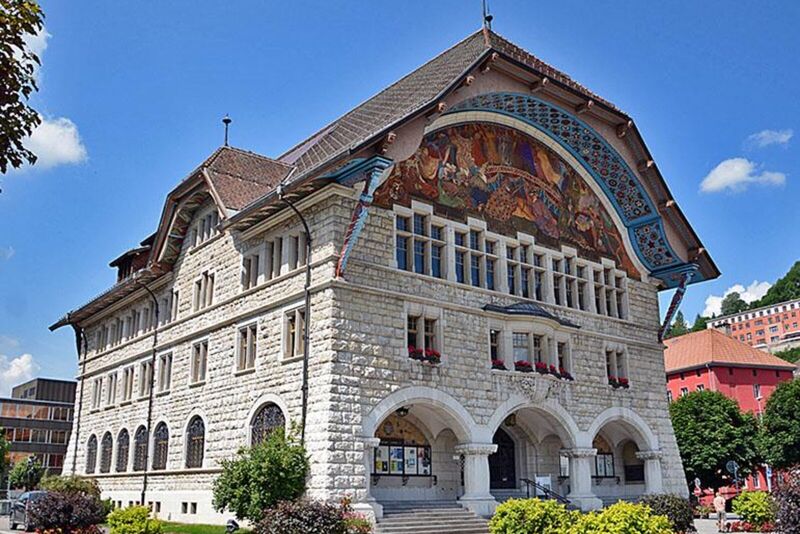
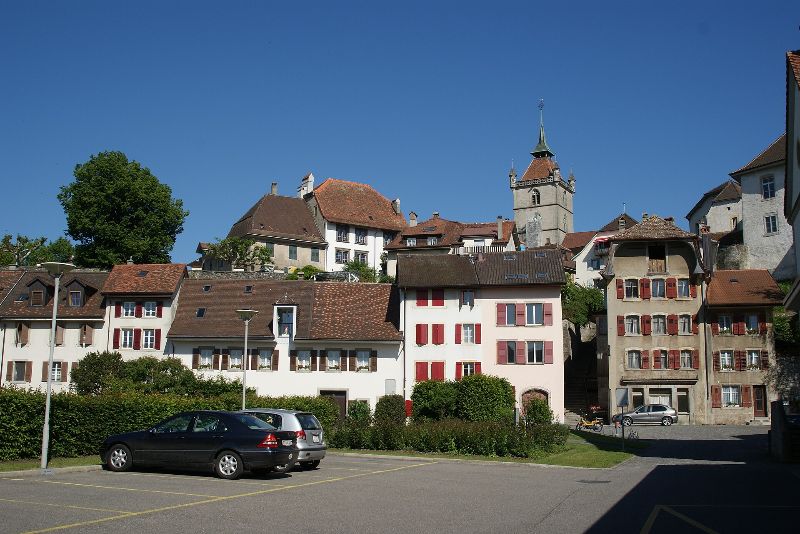
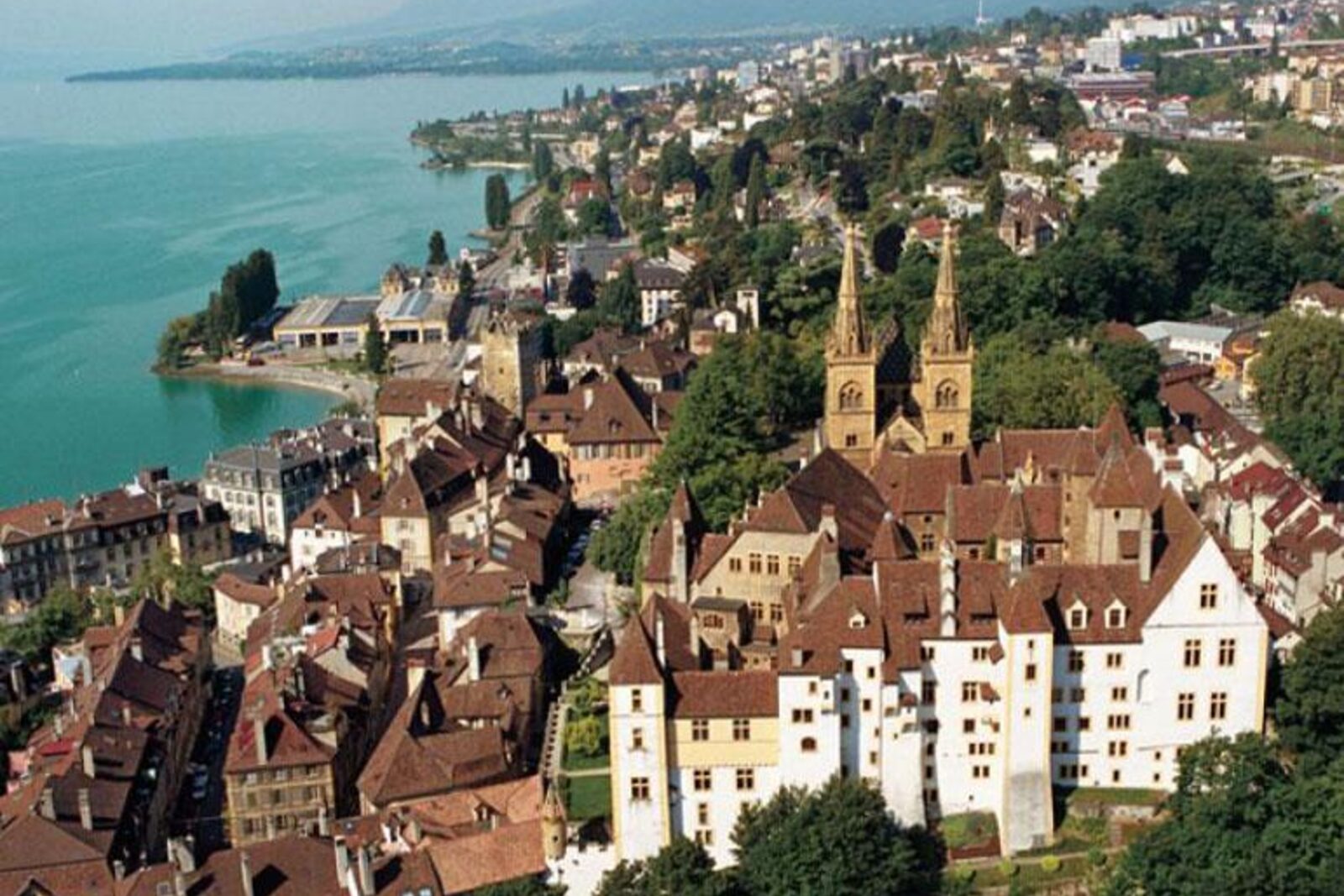
Neuchâtel rises gently from the lake towards the hills, and its historic centre is compact enough to explore on foot in an afternoon. The castle, a landmark that has long been associated with government in the canton, overlooks the old town and gives a clear sense of how the city grew from the water's edge up the slope. Its courtyards and terraces reward a slow walk, particularly when the late light falls across the lake.
Close to the castle, the collegiate church shows the Gothic architecture that shaped the city's skyline for centuries. Its interior is calm and simple, a contrast to the bustle of the streets below. From the church square and nearby streets, the rooftops of the old town step down towards the water, and on clear days the Alpine chain can be seen far to the south, which is a memorable view for travellers who have only just come from the mountains around Geneva.
Along the lakeside, the promenades and the port area fill with terraces when the weather is kind. A walk along the water links the old town with the gardens and museum district, and it is a natural way to spend a short visit. Many visitors arriving with a chauffeur choose to be dropped at a central hotel, leave their luggage and then explore on foot before dinner, which is far easier than dragging suitcases over cobbles.
The city centre is also a good place for a relaxed lunch, with cafés and restaurants serving regional dishes and a range of lake fish on the menu. Ask your hotel for a table recommendation when you check in, since popular terraces fill quickly on sunny weekends, and reserve early on public holidays when local families and visitors all head to the water at the same time.
For a more unhurried day, a combination of a morning walk through the old town and an afternoon on the lake shore works well. Museums and galleries in the centre are a good choice when the weather turns, and the short distances mean you can move between sights without needing a car in the middle of the day. If you want a driver for the whole afternoon, an hourly booking keeps the schedule flexible.
Lake Neuchâtel, vineyards and shore villages
Lake Neuchâtel is one of the largest lakes located entirely within Switzerland. Its shoreline is a patchwork of vineyards, small harbours, reed beds and orchards, and the villages along the edge each have their own character. The vines on the slopes produce white and red wines, with Chasselas among the well-known whites and Pinot Noir among the reds. Many estates welcome visitors for tastings by appointment, and the wine route is easy to explore by car.
The grape harvest celebrations in Neuchâtel are a well-known event in the autumn, with street festivities, music and tastings in the city. Visitors planning a trip in the harvest period should expect busier hotels and restaurants, and it is worth booking tables and accommodation early. The atmosphere in the streets during these weeks is lively, and the lake is often calm in the early morning before the crowds arrive.
Some passengers ask for a stop at a winery on the way back from the airport, or in the middle of a day trip. With a chauffeur, a planned detour is possible, subject to time and the chauffeur's schedule. Please mention it when you book, and the team will confirm what can be arranged for your group. A winery stop works well when it is planned for the middle of the day, rather than on the way to a flight.
- Wine estates along the shore, many with tasting rooms.
- Lakeside walks between villages with views across the water.
- Boat trips on the lake during the warmer months.
- Cycle routes that follow the shoreline and climb into the vineyards.
The villages on the western shore are quieter than the city and make a relaxed contrast to a busy schedule. Small harbours, reed-lined paths and simple restaurants with lake views are common, and a chauffeur by the hour can take you to several of them in one afternoon without the need to search for parking at each stop.
The watchmaking region of the Jura arc
Neuchâtel sits at the foot of the Jura, and the hills and valleys around it form part of Switzerland's watchmaking heritage. The towns of La Chaux-de-Fonds and Le Locle, a drive of under an hour from Neuchâtel, are recognised on the UNESCO World Heritage list for their watchmaking landscape, with grid-planned streets and workshop buildings that reflect the industry's history.
Museum visits are a common reason for both business and leisure trips. The International Watch and Clock Museum in La Chaux-de-Fonds and the horology collection at Le Locle display mechanical movements, tools and the story of precision timekeeping. Opening hours change by season and by day, so check before you set out, and allow a full morning or afternoon for a proper visit rather than a quick look.
For visitors touring several workshops or meeting makers in the Jura, a chauffeur by the hour keeps the schedule moving. The same driver can wait between appointments, which is more practical than hunting for parking in small villages, and the car is ready when the day ends. Appointments in small workshops can overrun, so a flexible booking helps protect the rest of the day.
The Jura also offers landscapes that are quite different from the lake. High pastures, forests and rocky ridges make the drive between Neuchâtel and the watchmaking towns a scenic trip in its own right, and the roads can be fog-bound in autumn, so leave extra time for the return.
A visit to the watchmaking region suits a wide range of travellers, from collectors and engineers to families with curious children. Ask the team for a route that puts the museums and workshops in the order that suits your appointments, and keep a lunch stop in the middle of the day so the schedule does not become rushed.
University, research and business travel
Neuchâtel is a university city, and its campus and research institutions attract students, academics and visiting specialists from across Switzerland and abroad. Teaching and research in fields such as microtechnology, watchmaking and the applied sciences connect the city to the wider network of Swiss innovation. The Haute école Arc, a university of applied sciences, is also active in the region with engineering and design programmes.
For business travellers, the appeal is predictability. A private chauffeur can be booked for a single meeting, for a full day of visits across the canton, or for a same-day return to Geneva. Invoices can be issued to a company on request, which helps finance teams keep trip records tidy. The journey is a fixed-price private transfer, so the cost of the trip is known before travel, and no per-kilometre surprises appear at the end.
Visiting academics, engineers and consultants often need to arrive with equipment, reports and samples. A car with enough space for a laptop bag, a sample case and a suit carrier removes the need to juggle items in the terminal. Tell the team about specialist equipment in advance so that the vehicle is chosen with room to spare.
- Airport to office transfers with the fixed vehicle price shown before booking.
- Full-day chauffeur service for visits across the Jura and the lake.
- Time in the back seat for calls, reading or document review.
- Return journeys to Geneva with the 10 % return reduction applied.
Companies that book several trips for the same team can use the same booking process for each journey, which keeps the paperwork consistent. Where a regular route is needed, ask the team to confirm the pick-up details in writing, so that the next trip can be booked quickly.
Step by step: from booking to hotel door
The process is simple, and each step is designed to remove uncertainty. Here is how a typical Neuchâtel transfer works from start to finish, so you know what to expect at each stage of the trip.
- Booking: choose your vehicle, enter pick-up and drop-off details and see the fixed price for the vehicle before you pay. Online booking is possible up to 12 hours before pick-up. For later requests, call or message WhatsApp on +41 78 871 71 33.
- Payment and confirmation: pay online by card, Apple Pay or Google Pay. An instant confirmation e-mail arrives with the details of your transfer, including the vehicle and the meeting arrangements.
- Flight tracking: share your flight number so the team can follow your arrival and adjust the pick-up time if the aircraft lands early or late.
- Meet and greet: after you land and clear immigration, your chauffeur waits in the arrivals area holding a sign with your name, so you can find the car without searching the crowd.
- Luggage: the chauffeur helps load your bags into the vehicle. The waiting time after landing is included, so there is no extra charge for the time spent collecting your luggage.
- The drive: about 85 minutes to Neuchâtel on a normal day. Tolls and fuel are included, so the price you saw before booking is the price for the trip.
- Drop-off: you are taken to your hotel, office or private address in Neuchâtel, with the chauffeur helping with bags at the door.
If anything in your plans changes after booking, contact the team as early as possible. Changes made well ahead of the pick-up are much easier to accommodate than requests made at the last minute, and the confirmation e-mail lists the details you will need to quote.
Vehicles and luggage for Neuchâtel transfers
Four vehicle types cover most Neuchâtel journeys. The Mercedes E-Class carries up to three passengers with three bags. The Mercedes S-Class carries three passengers with two bags and suits a more formal arrival. The Mercedes V-Class seats seven passengers with ten bags. The Premium Jet Van Sprinter carries nineteen passengers with up to twenty bags and is available on request.
The fixed price per vehicle is shown before booking, and tolls, fuel and luggage are included in that price. Select the vehicle that matches the number of passengers and bags on your booking, since the vehicle you choose is the one that sets the fixed price you see. A return trip receives a 10 % reduction, which applies when you book the outbound and return journeys.
When you choose a vehicle, count the passengers who will travel, not only the people who will sit in the back. Count each suitcase and each bag, including hand luggage that will be placed in the car. If your luggage is unusually large or fragile, say so. The chauffeur can then advise the safest way to load the vehicle.
Luggage is handled from the arrivals hall to the car and from the car to the door of your hotel or home. The chauffeur helps with bags at both ends, so you do not need to carry heavy cases across the car park or up steps unless you prefer to.
Neuchâtel: questions and answers
How much luggage fits in each vehicle for a Neuchâtel transfer?
Does the waiting time at arrivals start when the plane lands?
Does fog or winter weather affect the lakeside road to Neuchâtel?
Can we make a detour to visit a winery on the lake?
How does the return-trip reduction work?
What should I tell you about my hotel in Neuchâtel?
Which payment methods can I use to confirm a Neuchâtel booking?
What happens if I book less than 12 hours before pick-up?
More trips and contact8
How long is the transfer from Geneva Airport to Neuchâtel?
How far is Neuchâtel from Geneva Airport?
Which route do you take to Neuchâtel?
What is Neuchâtel known for?
Can I reach Neuchâtel by train from Geneva?
Which destinations are close to Neuchâtel?
How early should I leave Neuchâtel for my flight from Geneva?
Do you drive to hotels in Neuchâtel?
Services for this route
All services →

Geneva Airport Private Transfer
A door-to-door Geneva airport private transfer in a chauffeur-driven Mercedes, at a fixed fare per vehicle.


VIP and Luxury Chauffeur
A personal chauffeur and private Mercedes in Geneva for high-net-worth clients, family offices, assistants, concierges and luxury hotels.


Executive Chauffeur & Roadshows
A dedicated Geneva chauffeur service for executives, business meetings and investor roadshows across the region.


Event & Congress Chauffeur
Chauffeur transport for trade fairs, congresses and international conferences at Palexpo, the UN and venues across the region.