GVA → Switzerland · Ski resorts in Switzerland
Zermatt
In shortYour chauffeur drives you about 231 km from Geneva Airport to the Matterhorn Terminal in Täsch in roughly 3 h 15; from there the shuttle train reaches car-free Zermatt in about 12 minutes.
 GVA → Zermatt
Ski resort · Switzerland
Zermatt
Zermatt does not allow ordinary cars, so every road journey ends in the neighbouring village of Täsch. A private chauffeur from Geneva takes you all the way there in one go, then the Matterhorn shuttle train covers the final 12 minutes. It is the simplest way to avoid dragging bags between platforms at Visp.
Price for this trip
| Vehicle | Passengers | CHF |
|---|
per vehicle, one way
The drive to Zermatt
This Geneva airport private transfer runs for about 231 km and takes roughly 3 h 15. The route heads east along Lake Geneva and up the Rhône valley before turning into the Mattertal towards Täsch, the last point open to private vehicles.
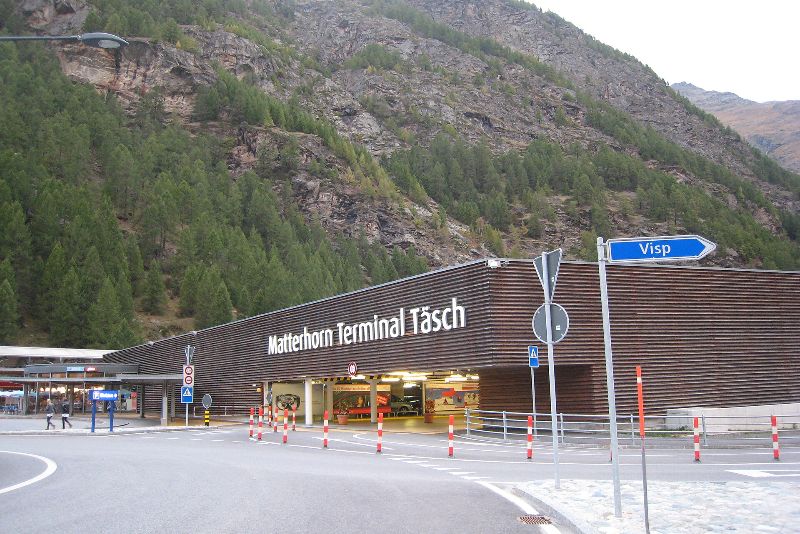
Because Zermatt is car-free, your chauffeur stops at the Matterhorn Terminal in Täsch. The shuttle train leaves from there and arrives in Zermatt about 12 minutes later. Compared with the rail journey, you skip the change at Visp with all your luggage.
Included in every booking
There are no extras to add at checkout: the amount displayed is per vehicle, not per seat, and it is final.
- A chauffeur waiting for you after customs, holding a name sign
- Flight monitoring from take-off, plus free waiting if your plane runs late
- A direct ride with your suitcases and ski or hiking gear, ending at the Matterhorn Terminal in Täsch
- Round-the-clock support on +41 78 871 71 33, by call or WhatsApp
Vehicles for this route
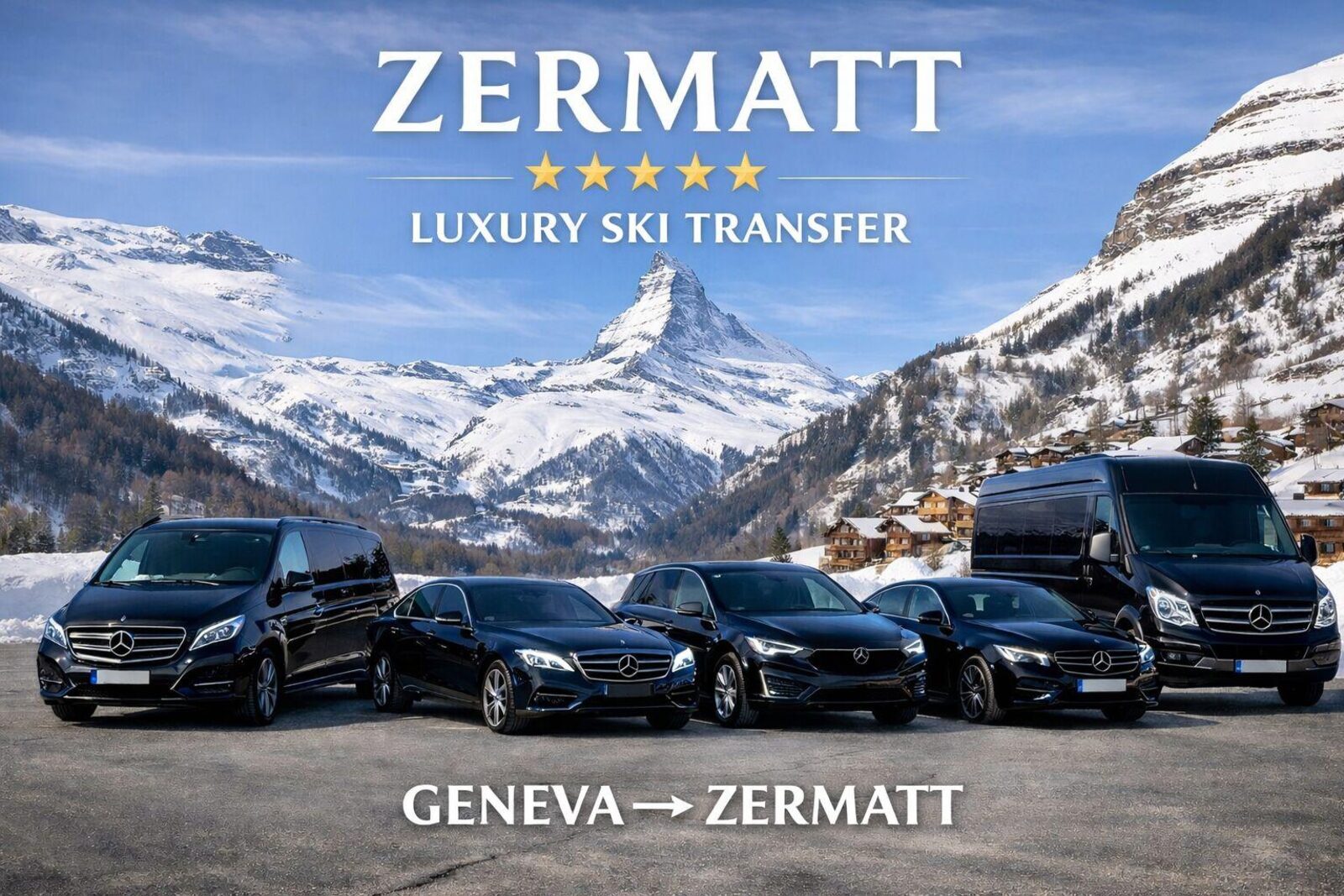
On a trip of more than three hours, extra space matters: the S-Class or V-Class keeps the ride relaxed, especially with ski or climbing gear. The E-Class is a comfortable choice for one or two travellers with standard bags. The S-Class adds space and quiet for executives or anyone wanting a Geneva luxury transfer service. The V-Class takes families and small groups with bulky luggage, and a Sprinter can be arranged on request for larger parties.
Reserve your car
Select Geneva Airport as pick-up and Zermatt as destination, add your flight details and pick the car that fits your party. You pay the displayed fixed fare by card, Apple Pay or Google Pay. Book at least 12 hours before travel; anything more specific can be arranged by phone or WhatsApp on +41 78 871 71 33.
Geneva Airport to Zermatt: the journey in outline
Zermatt is one of the most distinctive destinations in the Alps. The Matterhorn rises above the village, and the village itself is closed to ordinary traffic. From Geneva Airport the road distance to the Matterhorn Terminal in Täsch is about 231 km, and the drive takes roughly 3 hours 15 minutes. A private chauffeur takes you the whole way in one vehicle, and the car stops at Täsch, the last point open to private cars before Zermatt.
Täsch is where the journey changes mode. A shuttle train runs from the Matterhorn Terminal into Zermatt and covers the last stretch in about 12 minutes. For most guests the sequence is simple: the car brings you and your luggage to the terminal, and the train completes the trip into the resort. Because the village has no through traffic, the chauffeur plans every stop around this handover rather than around a street address in the centre.
A transfer of this kind suits anyone who wants to skip the change at Visp with heavy skis and cases. It also suits families, business travellers and groups who prefer one journey from the arrivals hall rather than a sequence of platforms, timetables and porters. The total time is longer than a car journey to a village in the valley, but the number of changes is kept to the minimum that Zermatt's rules require.
- Start: Geneva Airport arrivals, with your chauffeur holding a name sign
- Main road: motorway east along Lake Geneva, then the Rhône valley towards Sion and Visp
- Final road: the Mattertal road up to Täsch
- Handover: Matterhorn Terminal in Täsch, then the shuttle train into car-free Zermatt
The Geneva start is convenient for guests landing from across Europe and beyond, and the motorway section is among the most predictable parts of the journey. Passengers can settle in, check their messages and confirm the arrival plans with hotels or family members while the car makes steady progress along the lake and up the valley.
Why Zermatt needs a different kind of transfer
Zermatt is well known for its car-free centre, where electric taxis, small service vehicles and horse-drawn sleighs share the streets with pedestrians. That policy protects the atmosphere and the views, but it changes how visitors arrive. A standard airport transfer would end at a hotel kerb in the valley; a Zermatt transfer ends at the terminal and continues by train.
Understanding this early helps set expectations. The chauffeur does not drive into the village, and a booking that asks for a door-to-door drop-off in Zermatt will be planned around Täsch. Hotels in the resort are used to guests arriving this way, and many can arrange help with luggage from the station. It is still wise to check the arrangements with your hotel before you travel.
The altitude of Zermatt, at roughly 1,600 metres, and the mountain setting also shape the trip. Snow and cold are normal for much of the year, and the transfer from car to train takes place outdoors, so warm clothing and a plan for bags matter more here than at many other destinations.
- Zermatt has no private car access in the village centre
- The chauffeur drops you at the Matterhorn Terminal in Täsch
- The shuttle train completes the journey into Zermatt
- Plan warm clothing and a bag system for the outdoor handover
Many guests find the car-free rule one of the most appealing aspects of a Zermatt stay. Once you step off the shuttle, the village feels quiet and unhurried, and the transfer from Geneva becomes simply the first part of an experience built around walking, views and fresh air.
The drive to Täsch and the Matterhorn Terminal
The route to Täsch leaves Geneva on the motorway and follows Lake Geneva eastward before the road enters the Rhône valley. The valley opens out beyond Montreux and Vevey, and the drive passes vineyards, towns and river plains that make this corridor one of the most important routes in western Switzerland. After the Sion area, the road heads towards Visp, where the valley branches.
From Visp the road turns into the Mattertal, a narrow valley lined with villages and steep slopes. The final kilometres to Täsch are the most scenic part of the journey for many passengers, with the mountain walls rising on both sides and the first glimpses of the peaks ahead. The valley road is well used in winter and is planned around the heavy traffic of the ski season.
At the Matterhorn Terminal the car stops at a designated point. Your chauffeur helps with luggage and points you towards the shuttle platform. The terminal is a practical, purpose-built interchange rather than a village square, so it helps to know in advance which exit to use and how the luggage will be carried.
- Motorway east along Lake Geneva into the Rhône valley
- Sion area, then the road towards Visp
- The Mattertal, with its villages and steep valley sides
- Matterhorn Terminal in Täsch, the final stop for private cars
Passengers who enjoy the scenery will notice the change in light and temperature as the car climbs. The approach to Täsch is often quieter than the motorway, and the valley road gives a clear sense that the journey is moving into a different kind of landscape.
Timing: travel time by season and traffic
The 195-minute figure is a planning estimate for a clear, dry journey outside peak times. The total journey to Zermatt is longer than the car drive alone, because the shuttle leg and the transfer at the terminal add time. Allow a margin for both parts, and think in ranges rather than in a single figure.
- Quiet days outside school holidays: about 3 hours 15 minutes to Täsch, then roughly 12 minutes by shuttle
- Saturdays in the ski season, with heavy traffic on the valley road: often 3 hours 30 to 4 hours to Täsch
- Holiday changeover days and weekends in peak weeks: allow extra time at the terminal as well as on the road
- Snowfall, closures or accidents in the valley: allow more time and ask your chauffeur for the latest status
Shuttle departures run on a regular frequency, so a short wait at the terminal is normal. In busy weeks the platform can be crowded, and passengers with heavy bags should allow a few extra minutes. A late arrival in Zermatt is not a problem if the shuttle is still running, and your hotel can be told the expected time in advance.
Summer journeys are usually simpler, with the valley road less congested and the weather more predictable. Autumn and spring can be quieter but bring variable mountain weather. Whatever the season, leaving the airport with a margin gives the calmest arrival, especially for guests with a fixed time for check-in or a first lesson.
Waiting time after landing is included, so flight delays do not add a charge, and the team can adjust the pickup as your flight changes. Because the car, the shuttle and the hotel are linked, sharing your arrival time early helps everyone line up the handover smoothly.
The shuttle train to Zermatt
The shuttle train is the final stage of the journey. It runs from the Matterhorn Terminal in Täsch into Zermatt and covers the distance in about 12 minutes. The train carries passengers together with their equipment, and it is the usual way for visitors to enter the resort from Täsch.
For most travellers, the shuttle is quick and easy. Passengers board at the platform, sit with their luggage and arrive in the village without changing trains or carrying bags up stairs. Families with children, older travellers and guests with mobility needs should allow a little extra time for boarding and for moving between the car and the platform.
Shuttle services run to a timetable, and departures are frequent enough that a short wait is usual. If you have a tight schedule, let your chauffeur know so that the handover can be arranged promptly. Check the current timetable on the day, because service patterns can change with the season and with engineering works.
- Frequent departures, so a short wait is normal
- About 12 minutes from Täsch into Zermatt
- Suitable for passengers with luggage, ski bags and sports equipment
- Allow extra time for boarding in busy weeks and with children
The train ride itself gives a first view of the valley's upper section and the village approach, and many guests find it the moment when the holiday starts to feel real. Keeping a light bag with you for the short ride makes the arrival more comfortable.
Luggage and ski equipment at the terminal
Luggage needs careful planning in Zermatt, because the handover from car to train happens outdoors and the distance to the platform can be a short walk with heavy bags. Your chauffeur helps unload the car and points you to the right place, but you carry your own bags between the car and the shuttle, so pack with that step in mind.
- Use soft bags or wheeled cases, which are easier to move on snowy surfaces
- Keep the most important items in your hand luggage, including documents and medication
- Label every bag with your name, hotel and phone number
- Pack skis and boots in bags that are easy to carry as a pair
Ski equipment is part of everyday life in Zermatt, so guests are used to the arrangement. The key is to keep the handover simple. Before arrival, decide who carries which bag, and keep one person in charge of the family's equipment so that nothing is left in the car or on the platform.
Hotels in Zermatt often help with luggage from the station to the lodging. If your hotel offers this service, confirm the arrangements in advance and share your arrival time. Those staying in a self-catering apartment should ask about the most practical way to receive the bags, and about any access rules for the final stretch.
Winter driving on the Mattertal road
The road from Visp into the Mattertal is a mountain road, and in winter it can be affected by snow, ice and reduced visibility. Swiss regulations require suitable winter tyres when conditions call for them, and signs indicate when snow chains are needed on specific sections. Your chauffeur follows official road information and decides on the day which equipment is required.
Passengers can help by staying seated with seatbelts fastened, keeping bags secured and speaking up if they feel unwell. Winter driving is most comfortable at a steady, moderate pace, and a chauffeur who knows the valley road will read the surface and the traffic before choosing a speed.
- Carry warm clothing and water in the car
- Keep your phone charged with the chauffeur's number saved
- Allow a margin for possible closures on heavy snow days
- Tell the team about any mobility needs well before pickup
If the valley road is closed or delayed, the chauffeur will explain the situation and the expected timing. Where possible, the team will suggest an alternative, such as a later departure, so that the shuttle connection and the hotel arrival can be adjusted. Patience and early communication make a real difference when the weather changes.
Zermatt as a resort
Zermatt sits at roughly 1,600 metres in the Mattertal, with the Matterhorn, at about 4,478 metres, dominating the skyline. Its position makes it one of the most widely known mountain villages in the Alps, and its car-free character gives it a calm and distinctive feel. The village is compact, and most hotels and chalets are within walking distance of the centre.
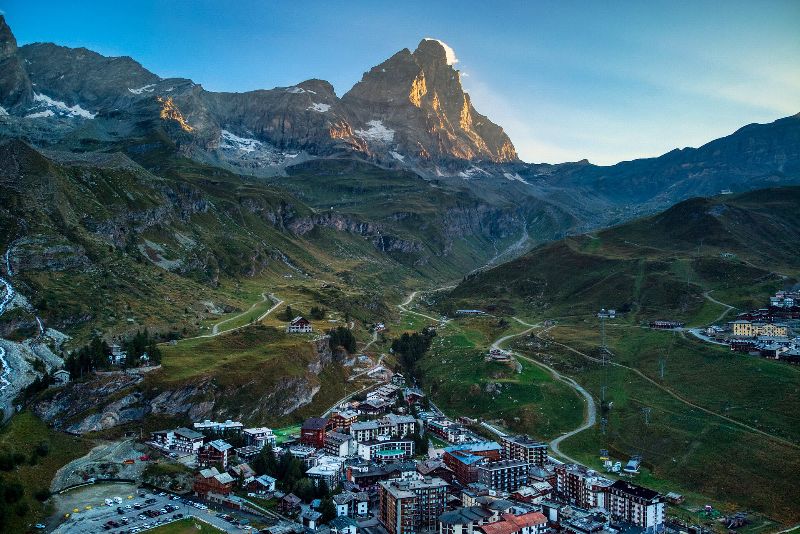
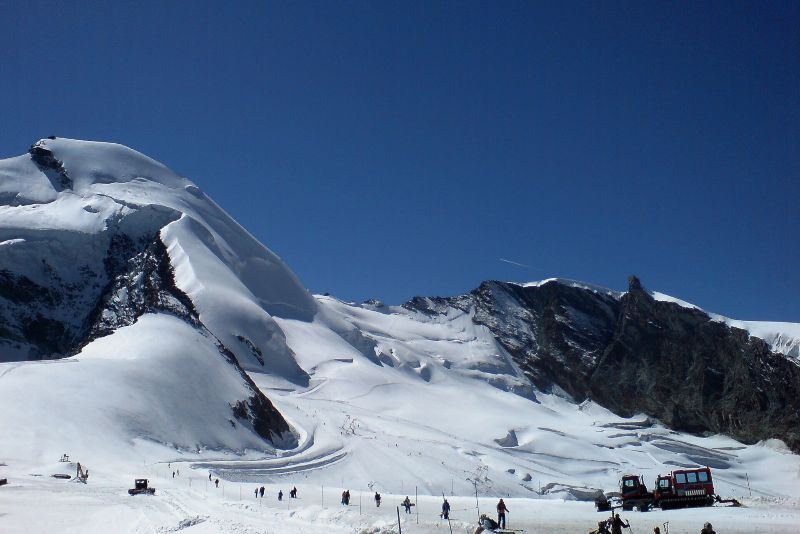
The ski area is among the largest in the Alps, with runs and lifts reaching high into the glacier zone. The Gornergrat railway climbs to a viewpoint across many peaks, and glacier skiing is available for much of the year. The ski area also connects across the border with the Italian resort of Cervinia, which adds a further dimension for skiers who want to ski across two countries.
Summer and autumn bring hiking, lake walks and cycling, and the same car-free rules apply throughout the year. Electric taxis and small service vehicles keep the centre quiet, so visitors who arrive by shuttle find the village easy to explore on foot.
- Altitude: roughly 1,600 metres in the village
- Matterhorn: about 4,478 metres
- Car-free centre, with electric taxis and service vehicles
- Ski area reaching into the glacier zone, linked to Cervinia
Because the centre has no through traffic, it is quiet at night and easy to navigate on foot. Restaurants, shops and bars cluster around the main streets, and the hotels and apartments are spread across the village and its quieter edges. Your accommodation details will help the team plan the final stretch from the station.
Your transfer step by step
The sequence for a Zermatt transfer is straightforward once you know the handover. Each step below follows the same logic: book, track, meet, load, drive, hand over and continue by shuttle.
- Book online with your flight number and passenger details, up to 12 hours ahead; for shorter notice, call or send a WhatsApp message to +41 78 871 71 33
- Pay online by card, Apple Pay or Google Pay
- Receive an instant confirmation by e-mail, with the vehicle type and the booking details
- Share your flight so that the team can track it and adjust the pickup to your landing time
- Meet your chauffeur in the arrivals hall, where a name sign shows your name
- Collect your luggage and load the car together
- Drive to the Matterhorn Terminal in Täsch, with tolls, fuel and luggage included
- Take the shuttle train into Zermatt and continue to your hotel or apartment
Waiting time after landing is included, so delays on the plane or in passport queues do not add a charge. If your schedule changes, let the team know as early as possible. The service runs 24 hours a day, and a late arrival or early departure is handled in the same way as a daytime journey.
Zermatt: questions and answers
Can a private car drive into Zermatt?
How do I pay for the transfer?
How long does the transfer from Geneva Airport to Täsch take?
Where will the chauffeur meet me?
What happens to my bags if the shuttle train is full?
Who helps me carry bags from Täsch to my hotel in Zermatt?
Is the road to Täsch open all winter?
Can I take a large sledge or pram on the shuttle train?
Can my chauffeur wait if the shuttle train is delayed?
What clothing should I have ready for the outdoor handover at Täsch?
Is Zermatt a good choice for travellers who prefer a car-free stay?
Can I plan an onward trip to Italy from Zermatt?
More trips and contact8
Can my company receive an invoice for a transfer to Zermatt?
Can you pick me up at Geneva Cornavin station for a transfer to Zermatt?
How do I change the pickup time of my transfer to Zermatt?
Is the transfer to Zermatt suitable for people with reduced mobility?
Can I add an extra pickup address on the way to Zermatt?
Do you offer transfers to Zermatt all year round?
How do I book my transfer to Zermatt?
Which vehicles are available for Zermatt?
Services for this route
All services →

Geneva Airport Private Transfer
A door-to-door Geneva airport private transfer in a chauffeur-driven Mercedes, at a fixed fare per vehicle.


VIP and Luxury Chauffeur
A personal chauffeur and private Mercedes in Geneva for high-net-worth clients, family offices, assistants, concierges and luxury hotels.


Geneva Airport Private Ski Transfer
A Geneva airport private ski transfer to your chalet or hotel in the Swiss, French or Italian Alps, with space for your equipment.


Group Transfers by Minibus
A Geneva airport private transfer for groups: Mercedes Sprinter minibus or V-Class vans for teams, families and ski clubs.